
The charity making life better by water

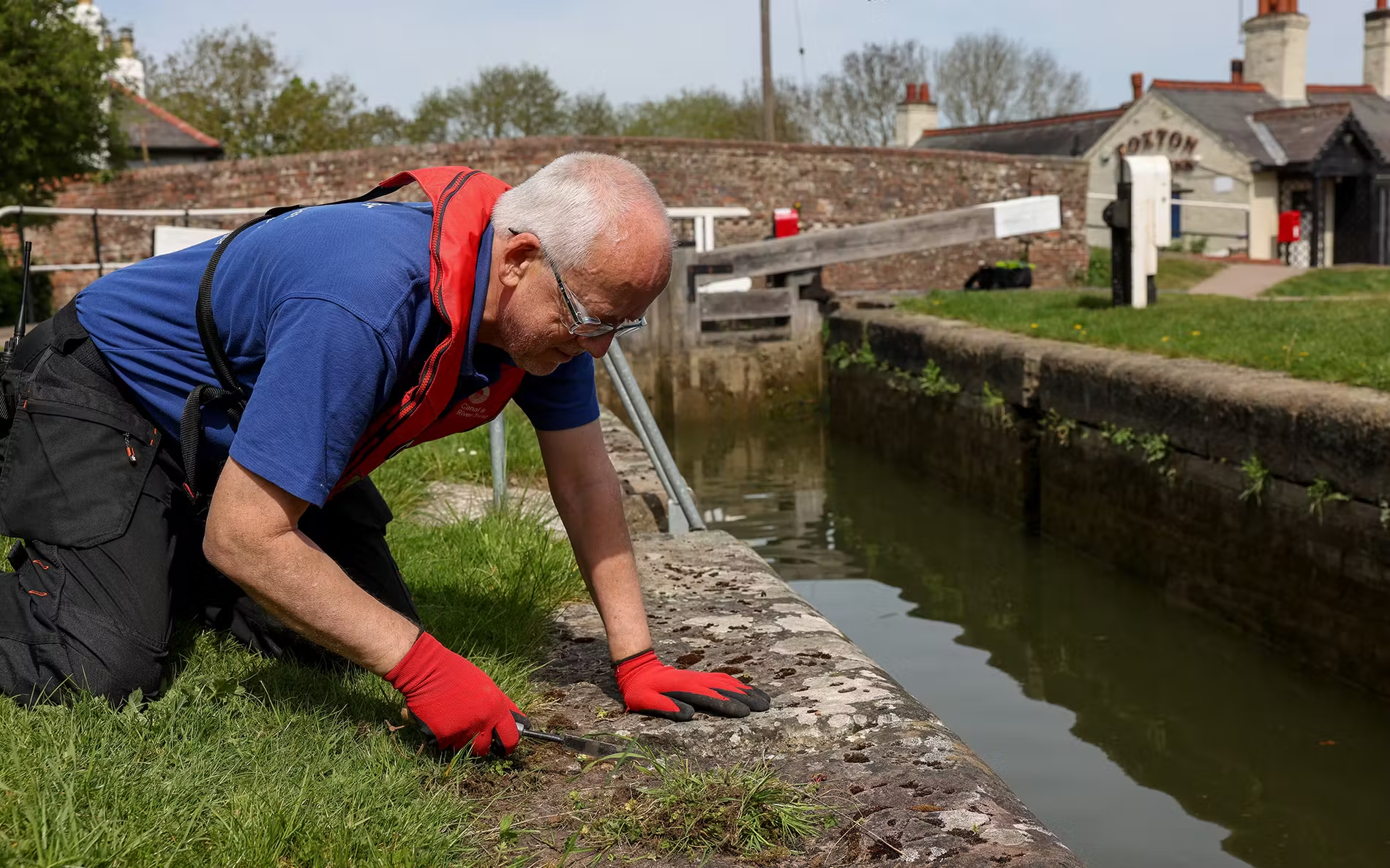
A guide to removing wash wall vegetation

Whether you are part of our boating community, or take the odd walk along our towpaths, we want to empower you to volunteer on an informal basis in your own time.

What is wash wall vegetation?

Wash wall vegetation is the build up of weeds and saplings that grow from the wash wall, along the waters edge of the towpath. Constantly a pressure on our network of canals, wash wall vegetation prevents access for boaters to moor up alongside the towpath. It also causes long term difficulty, destabilising canal banks and leading to costly repairs.

For this task, we only recommend tackling saplings and weeds that are no more than a thumb width (1.5cm). Anything larger can be reported to the Trust for our operatives to tackle.

Where do I fit in?

This is an easy, small task that can be completed any time you visit our canals. You can remove as much or as little as you like! This guide shows you the basics, how you can use tools that you may already have and how to complete the task with your safety in mind. Thank you so much for dedicating your time to this activity, your work will help to keep canals alive and thriving!
Keeping your safety in mind

As you will be working near the water, a few safety recommendations are necessary.

  • Leptospirosis: Canal water can carry Leptospirosis, a rare but serious disease. If you feel unwell after contact, especially with flu-like symptoms, seek medical advice and inform your GP
  • As you'll be working next to the water, there is a risk that you could fall in. You may wish to consider using a lifejacket
  • Gloves will help to protect you from any thorns or sharp edges on vegetation. They also protect from the risk of leptospirosis entering through cuts, grazes or broken skin
  • Wearing glasses will help to reduce the risk of sharp edges or thorns coming into contact with your eyes. Sunglasses are an equally good alternative
  • Wash your hands as soon as you have finished with this task. If you don’t have facilities local to you, wet wipes can do the job just as well

Tools for the task

Here's some recommended tools for the task. You are free to use whatever you are comfortable with or is available to you.

  • Secateurs or loppers are the perfect tool for chopping back vegetation. Make sure to wear gloves to reduce the risk of cuts.
  • A kneeling mat or an old towel can help to reduce pressure on your knees and give you a clean, balanced surface to work from.
  • A spare bit of rope or cord can help to prevent saplings and vegetation from entering the water, making them easier to handle.

The process

  1. Prepare: Check the area for dog waste, loose stones and only pick vegetation that you can manage with the tools available.
  2. Align yourself: Using a mat or a spare towel, position yourself alongside the bank in a 45 degree angle so that you are balanced.
  3. Using secateurs: Grab hold of the vegetation and cut the saplings and weeds at the base.
  4. Using loppers: Loppers work great for larger branches and vegetation that cannot be reached with secateurs.
  5. Old rope: To help keep the vegetation from entering the water, a bit of old rope tied around the saplings can help.
  6. Collecting the chippings: Keep the clippings in a neat and tidy pile, ensuring that they aren’t left on the towpath.
  7. Disposal: Neatly tuck the clippings in a line on the outer edge of the towpath, or behind a wall or hedge if there is already vegetation present.
  8. Habitat piles: For larger collections, you can create layered habitat piles in adjacent woodland.

FAQs

  • Will the Trust provide me with tools?

    This task has been designed for you to complete on your own initiative using tools you already have available. Unfortunately, we’re unable to provide tools for informal volunteering tasks.

  • What about vegetation on the other side of the canal?

    Vegetation away from the towpath side is managed by our volunteer towpath taskforces and operational teams, as it often requires a more intense approach and specialist equipment. Interested in getting involved? Head on over to canalrivertrust.org.uk/volunteer.

  • Can I work with larger branches thicker than 1.5cm?

    As this is intended to be a simple, informal task, we recommend only tackling vegetation up to around thumb-width (approximately 1.5 cm in diameter). Larger branches can present greater risk and are better managed by our trained staff, volunteers, and contractors using appropriate equipment.

  • What should I do if vegetation is too difficult to remove?

    If vegetation is too large or difficult to remove safely with the tools you have, please leave it and report it to the Trust so it can be addressed by trained teams.

  • What if there are boats moored nearby?

    Please avoid working with vegetation that is directly surrounding moored boats.

  • Do I need to tell the Trust before I start?

    No, this activity has been designed so you can help out informally whenever you wish. You do not need to register beforehand.

  • Disposing of clippings over a wall - is this really allowed?

    Yes, in certain situations. If there is a hedge or substantial vegetation already present behind a wall, it can provide benefits to animals, birds and insects in the form of habitat space. We wouldn’t advise you do this without existing vegetation present, such as in urban areas.

How to contact us

If you need to contact us to report any patches of vegetation that are too tough to handle, or more specifically if the canal or towpath is blocked, you can speak to us by calling us on 0303 040 4040. It might be helpful to give us a what3words reference of where the problem area is located. You can find this by heading over to what3words.com

Two volunteers in high vis jackets gardening on the canal towpath

Volunteer with us

Volunteer and help us keep canals alive. Search all current opportunities

Last Edited: 26 May 2026

photo of a location on the canals
newsletter logo

Stay connected

Sign up to our newsletter and discover how we protect canals and help nature thrive